01
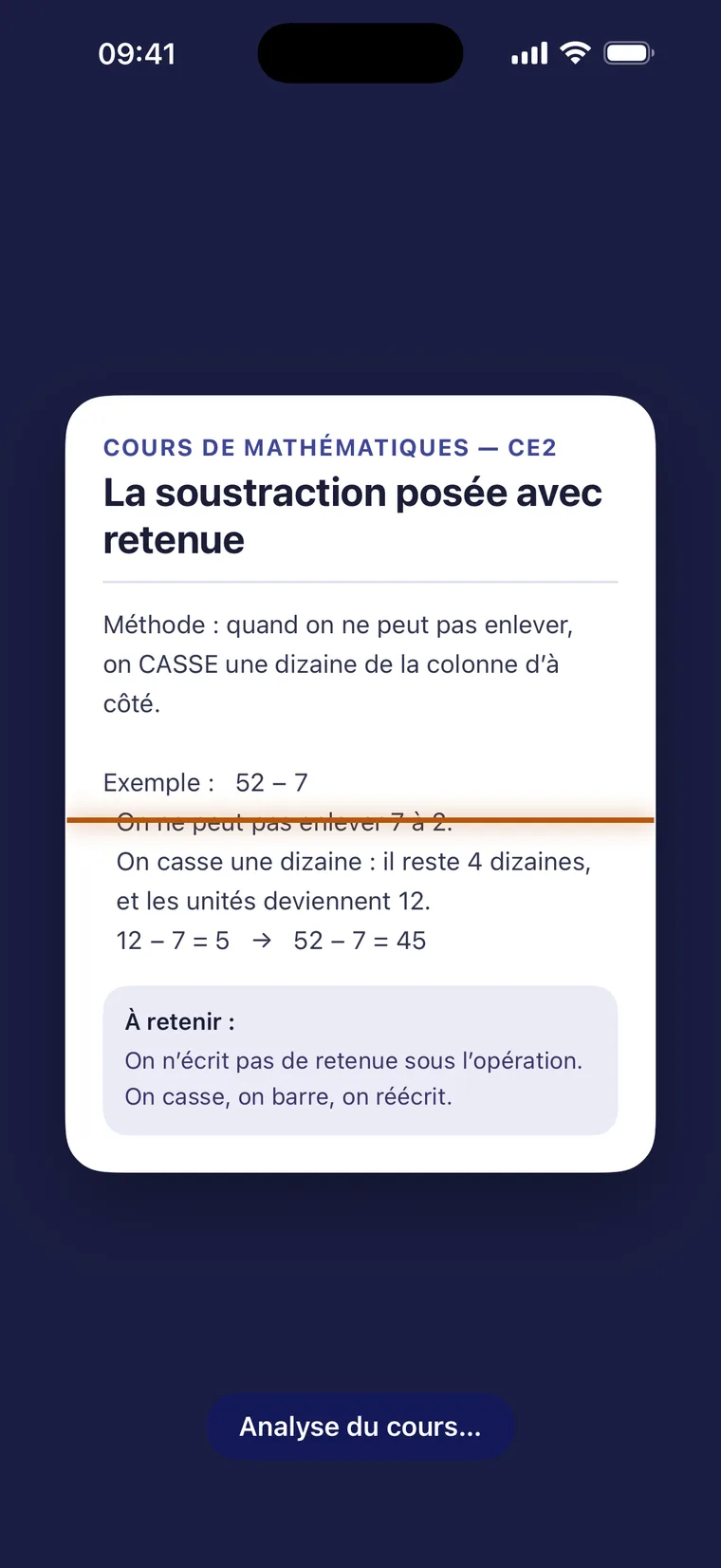
Photograph the lesson and the homework.
One page at a time. Binomino recognises the subject and the concept.
Not sure how to explain it?
Snap the exercise. Binomino gives you the steps and the exact words to say, the way their class does it.
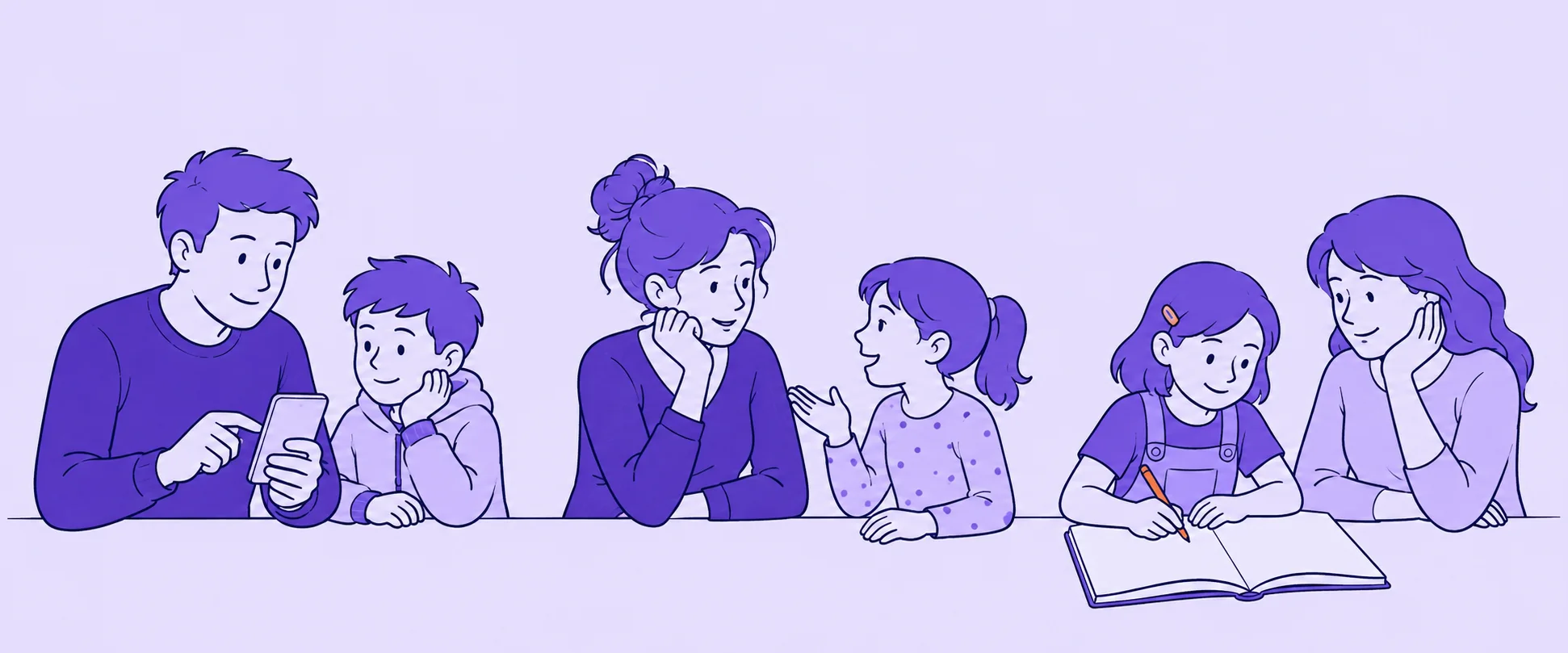
You guide. They do.
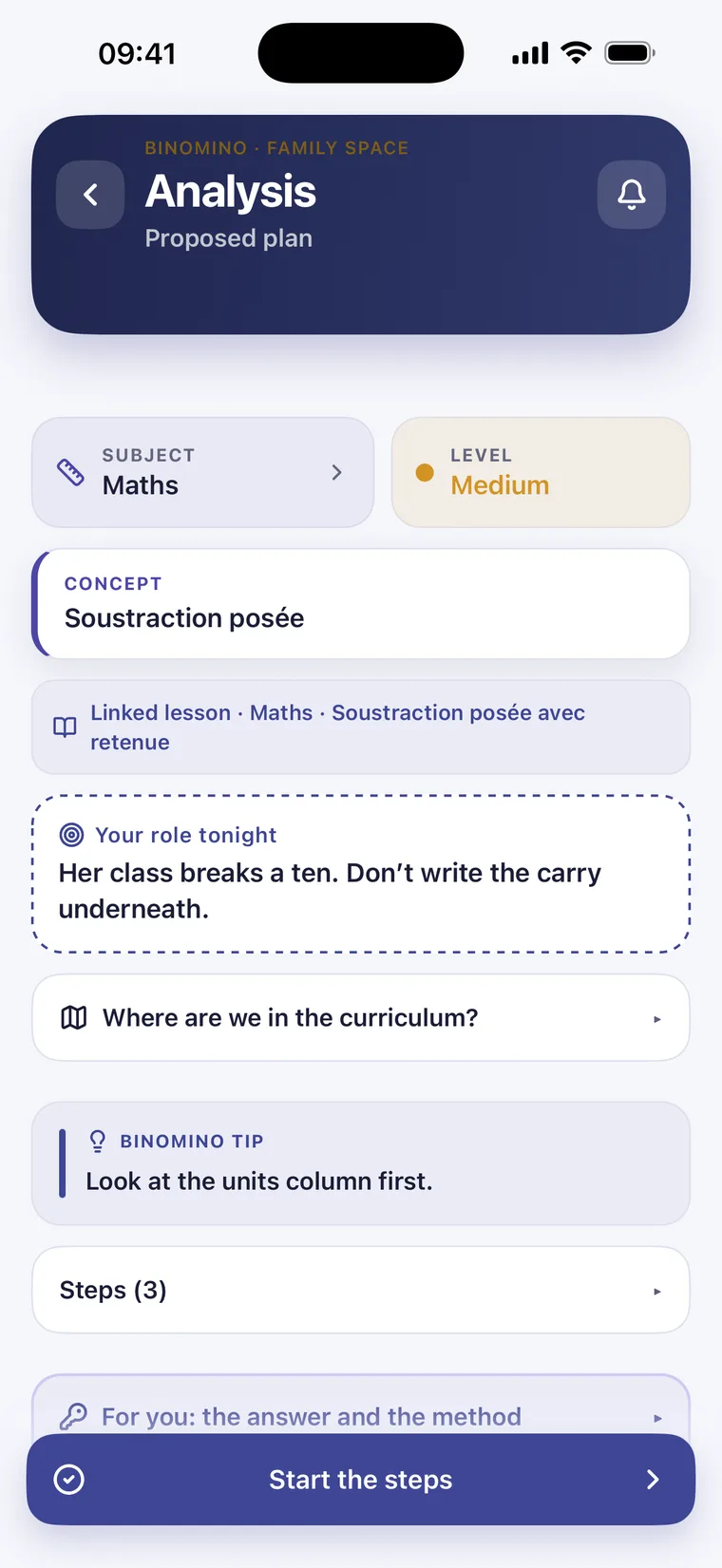
01The lesson from their exercise book
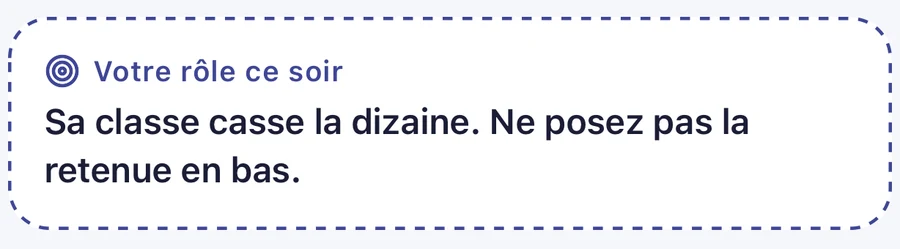
02A sentence for you
03Something to work out for them
What you’re trying to get back
The difference
Other apps give the answer to your child. Binomino keeps it for you.
An app that answers
With Binomino
An app that answers. In the test, the phone isn’t there.
With Binomino. In the test, they know how to go about it.
What derails the evening
You show them how you used to do it. They answer: “that’s not how you do it.”
They’re right. The methods have changed.
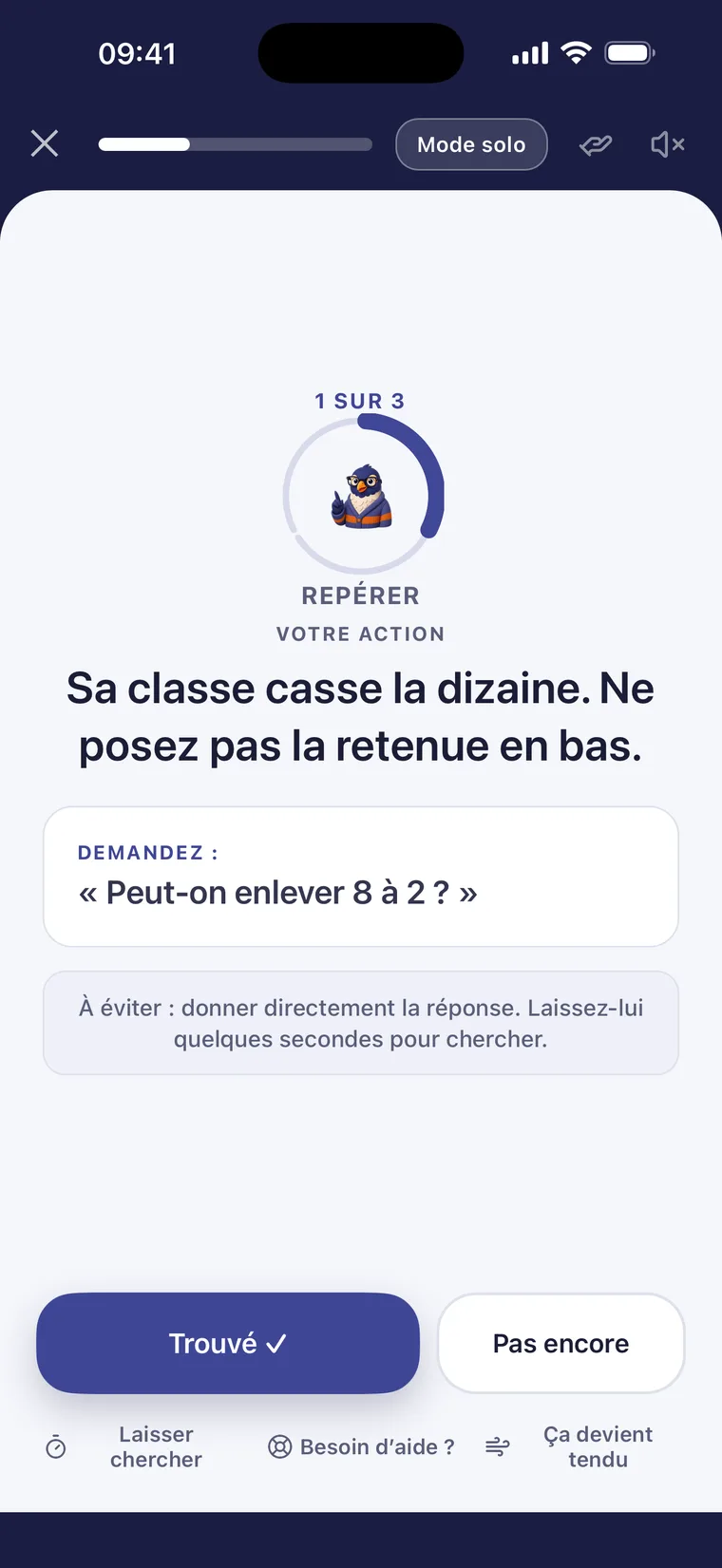
In primary school, for a subtraction, many classes break up the ten instead of putting the carry digit at the bottom. At collège, they no longer say “it moves to the other side”: you take the same thing away from both sides.
Two correct methods — and a child who no longer knows which one is theirs. That’s where they lose their footing, not on the arithmetic.
Binomino starts from the lesson written in their exercise book. You explain it the way their class does.
How it works
The method
One page at a time. Binomino recognises the subject and the concept.
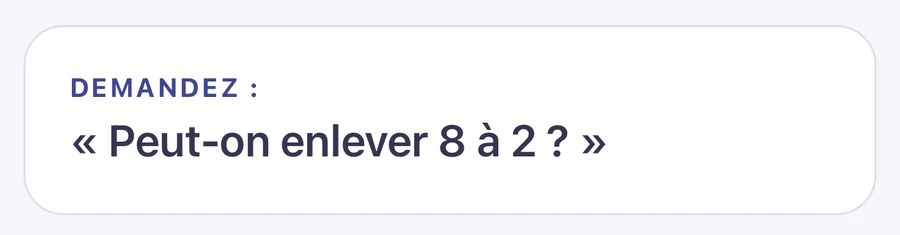
The method written in their exercise book, the question to ask — and what is better left unsaid.
One step at a time. If they get stuck, Binomino gives a prompt. Before moving on, they explain the concept back in their own words: until they can, it hasn’t sunk in.
From CP to Terminale
Your role changes. So does Binomino.


The video
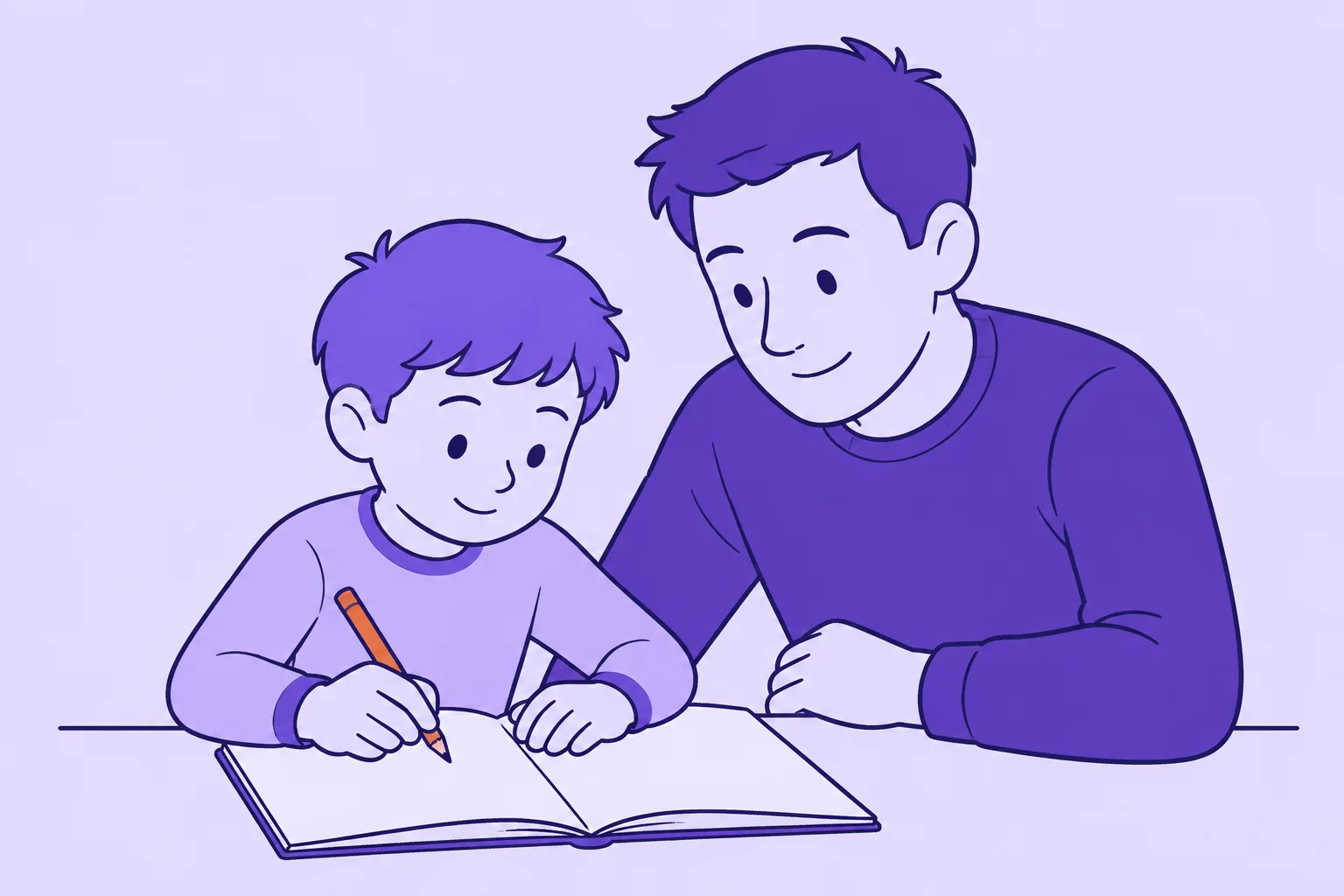
Parentreads and listens
Binominobreaks it into steps and prompts
Childworks at it and explains
At collège
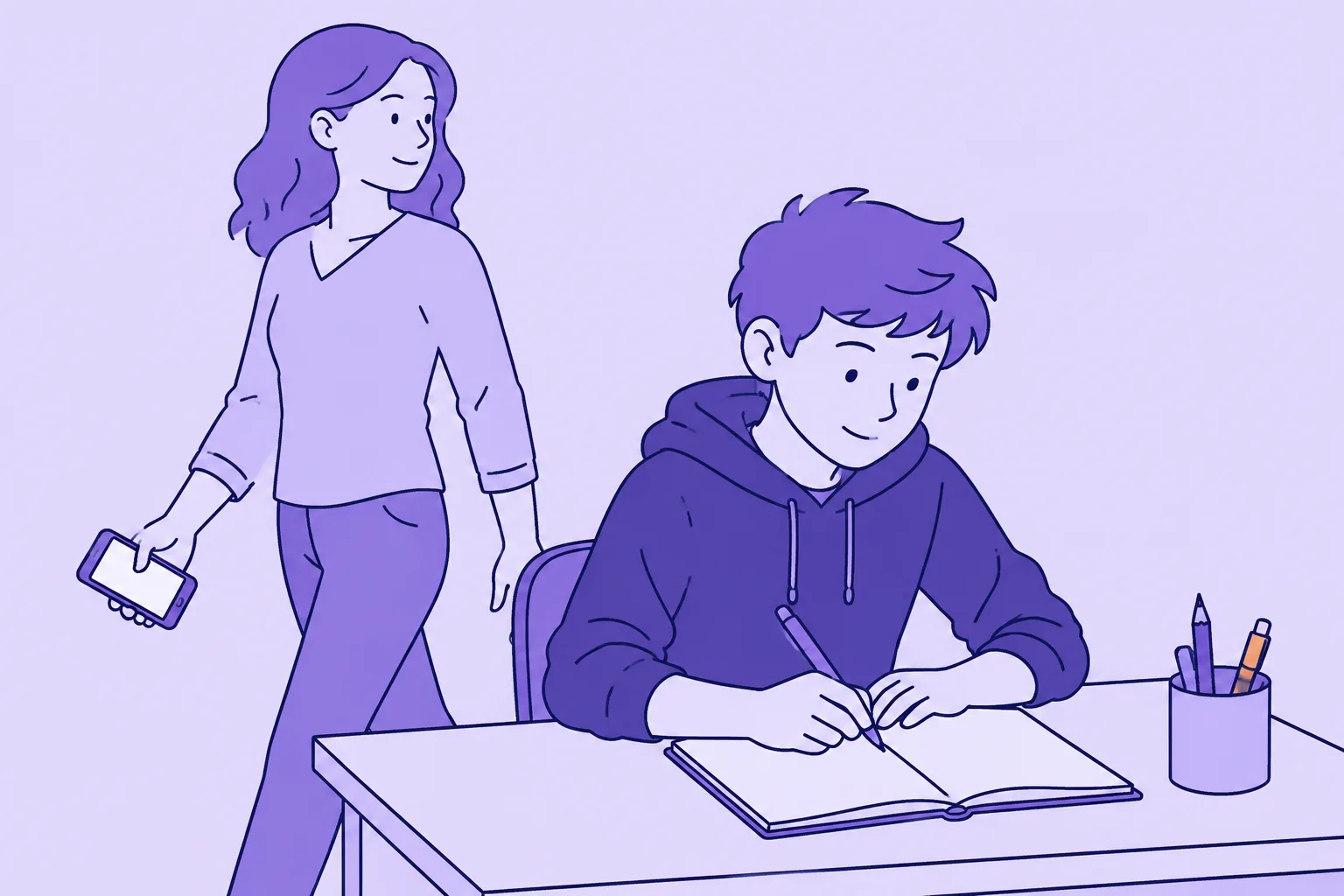
That’s normal. You can still be useful, in a different way.
You don’t know how to do their homework any more. You can still help them.
Day to day
Binomino reads the instructions and prompts aloud, in your language.
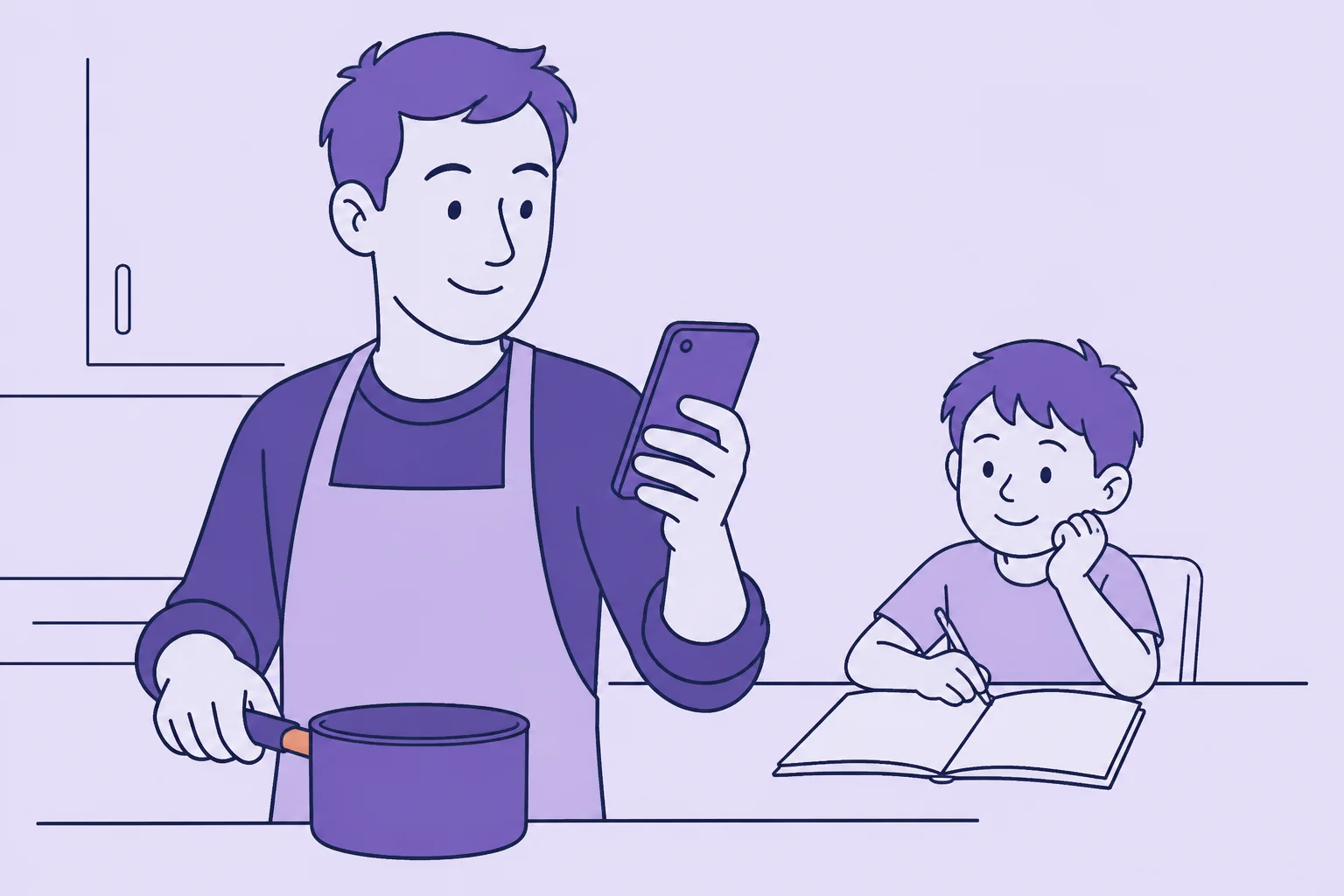
You keep an eye on them, Binomino keeps the thread. You only step in if they get stuck.
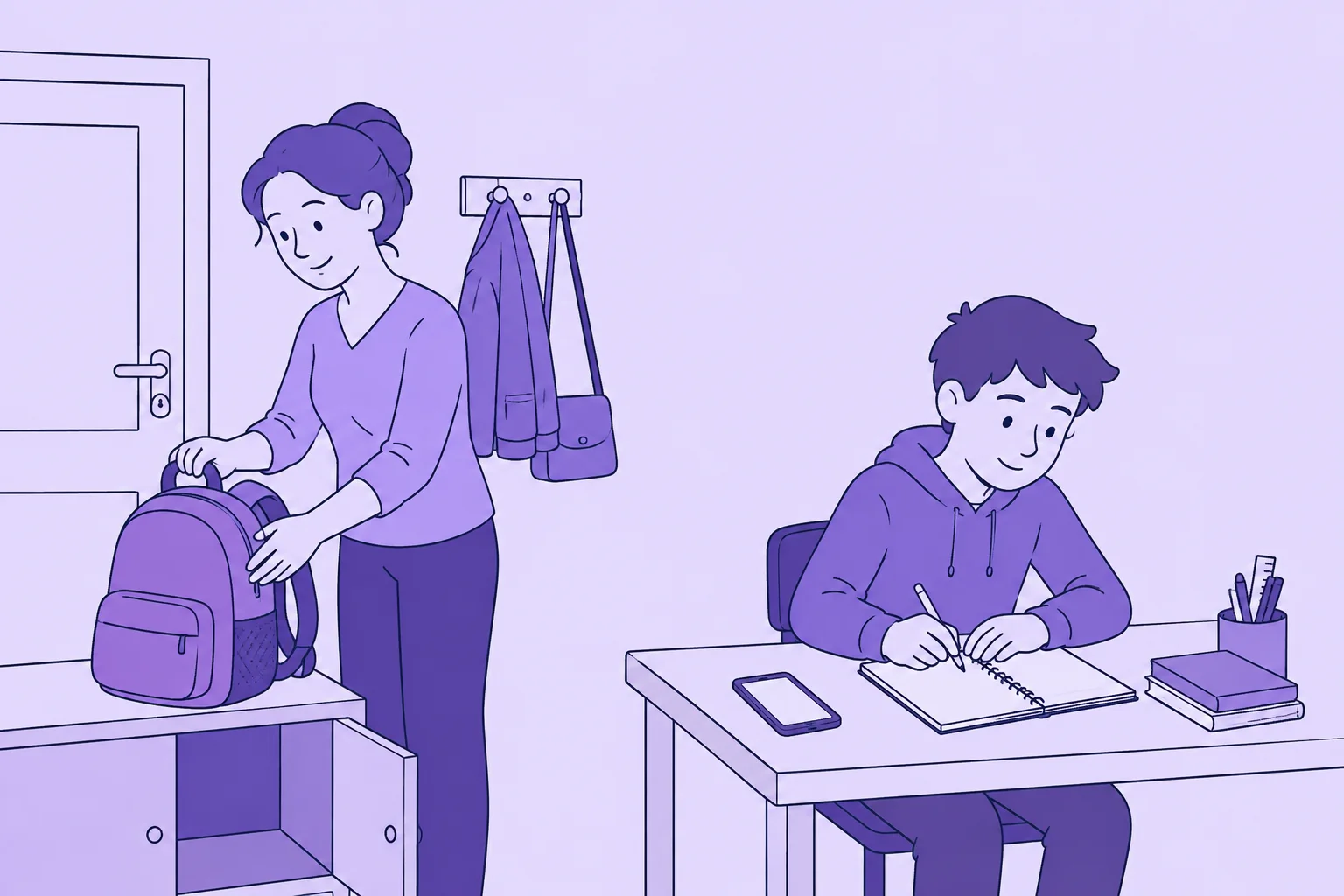
At the end of the session, send the other parent the dated summary signed “done with you”: the concept covered, where they got stuck, what still needs going over. They receive it by message, with nothing to install.
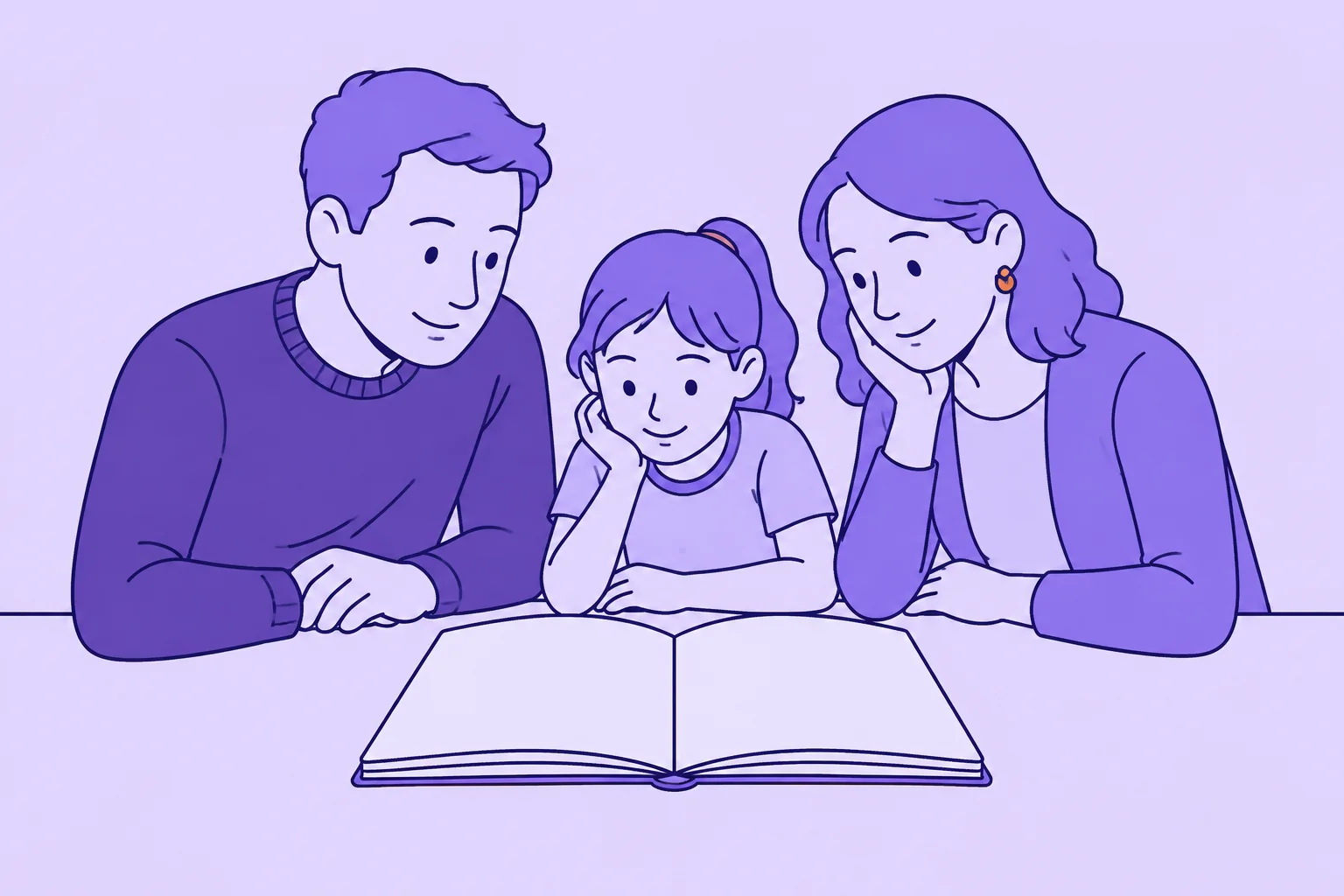
You’re the one who sends it: the two phones don’t sync yet.
It remembers where they got stuck, not everything.
Languages
Five languages for you. Only one for them: the one used in class.
The interface, the explanations and the sentence to say are translated. What comes from the notebook — the concept, the instructions, the teacher's words — stays in French, because that is what your child will meet again in the test.
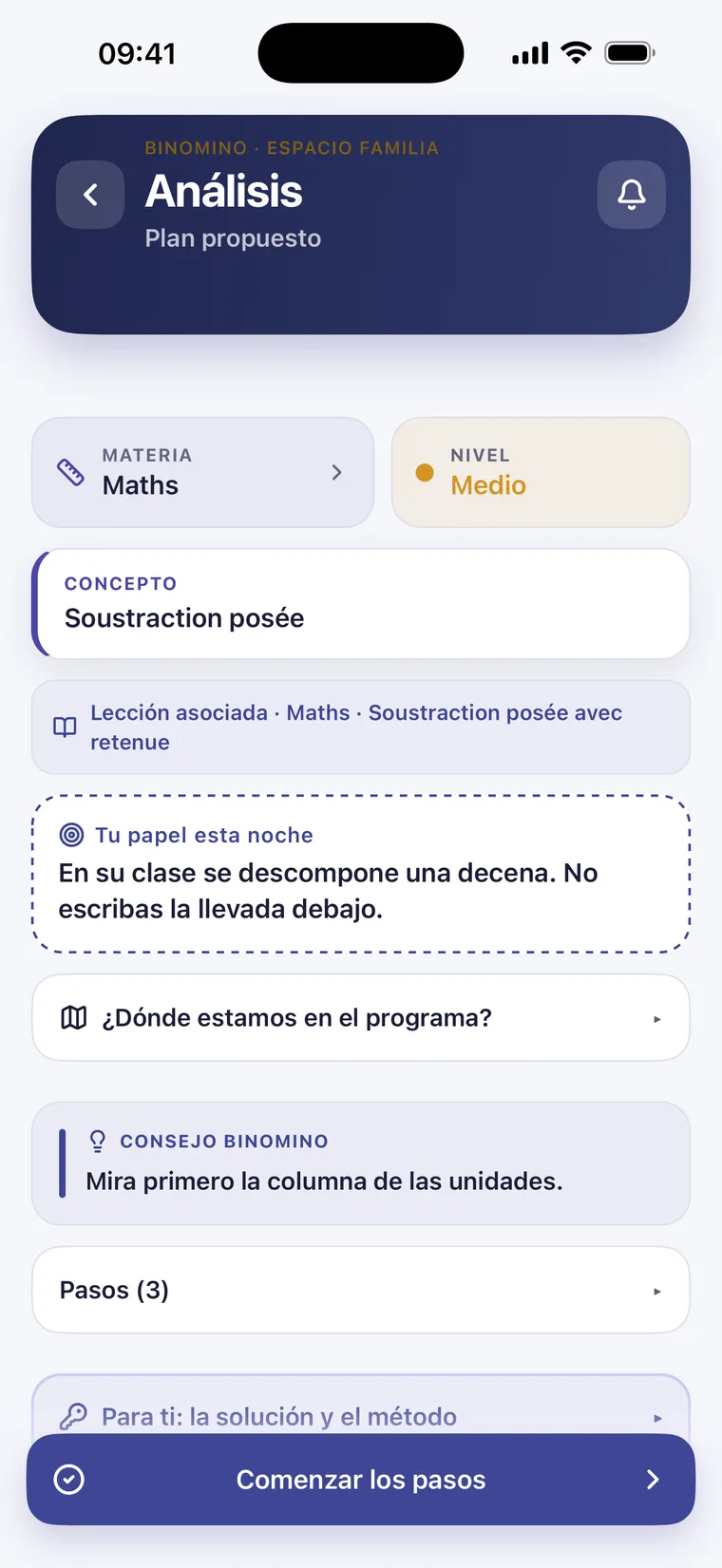
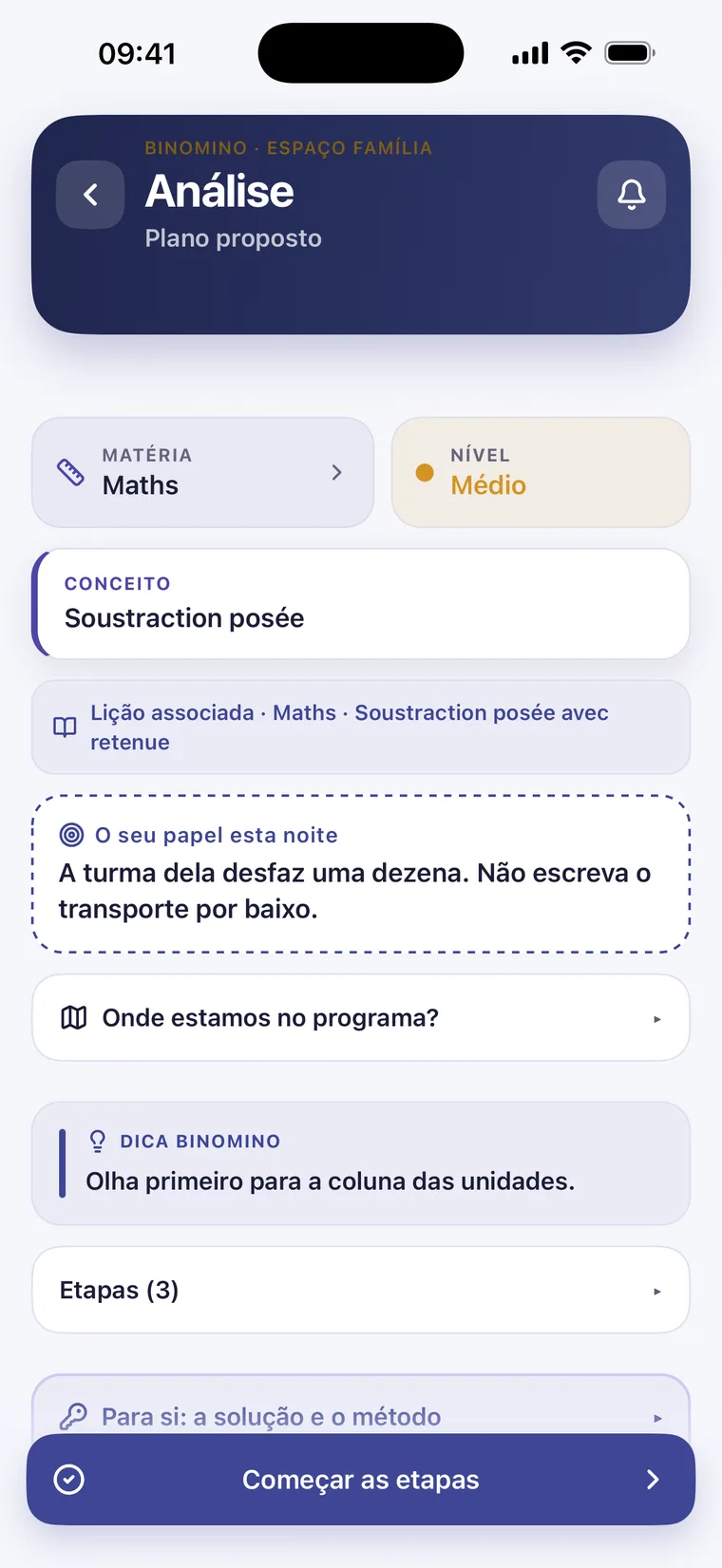
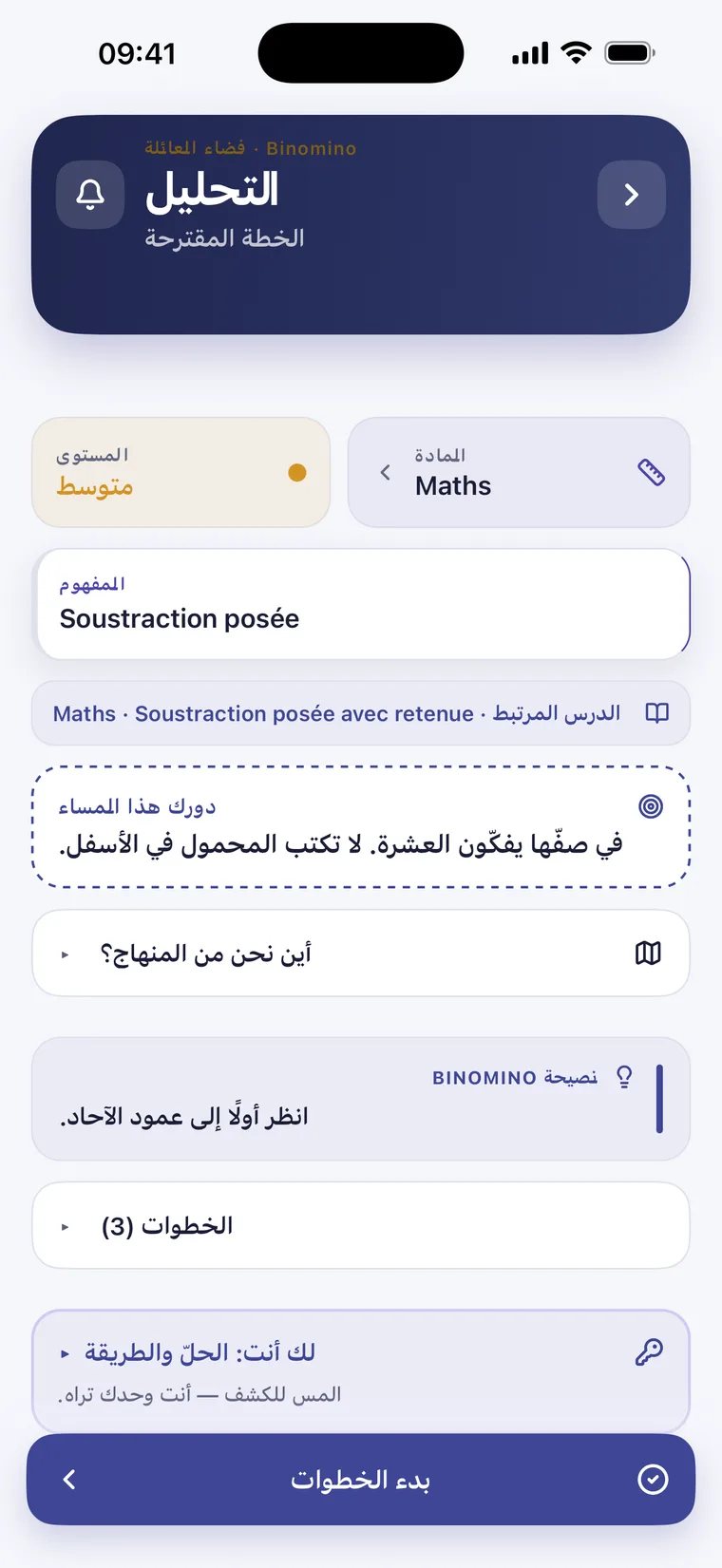
The same homework, in four languages. Only « Soustraction posée » stays put.
Hover a screenshot to enlarge it.
Keeping track
On Monday evening, you can’t remember what they got stuck on last Thursday. The app can.
TodayTonight’s work, nothing else.
To consolidateThe concepts that put up a fight, to go back over.
DocumentsTheir lessons and homework, scanned and filed.
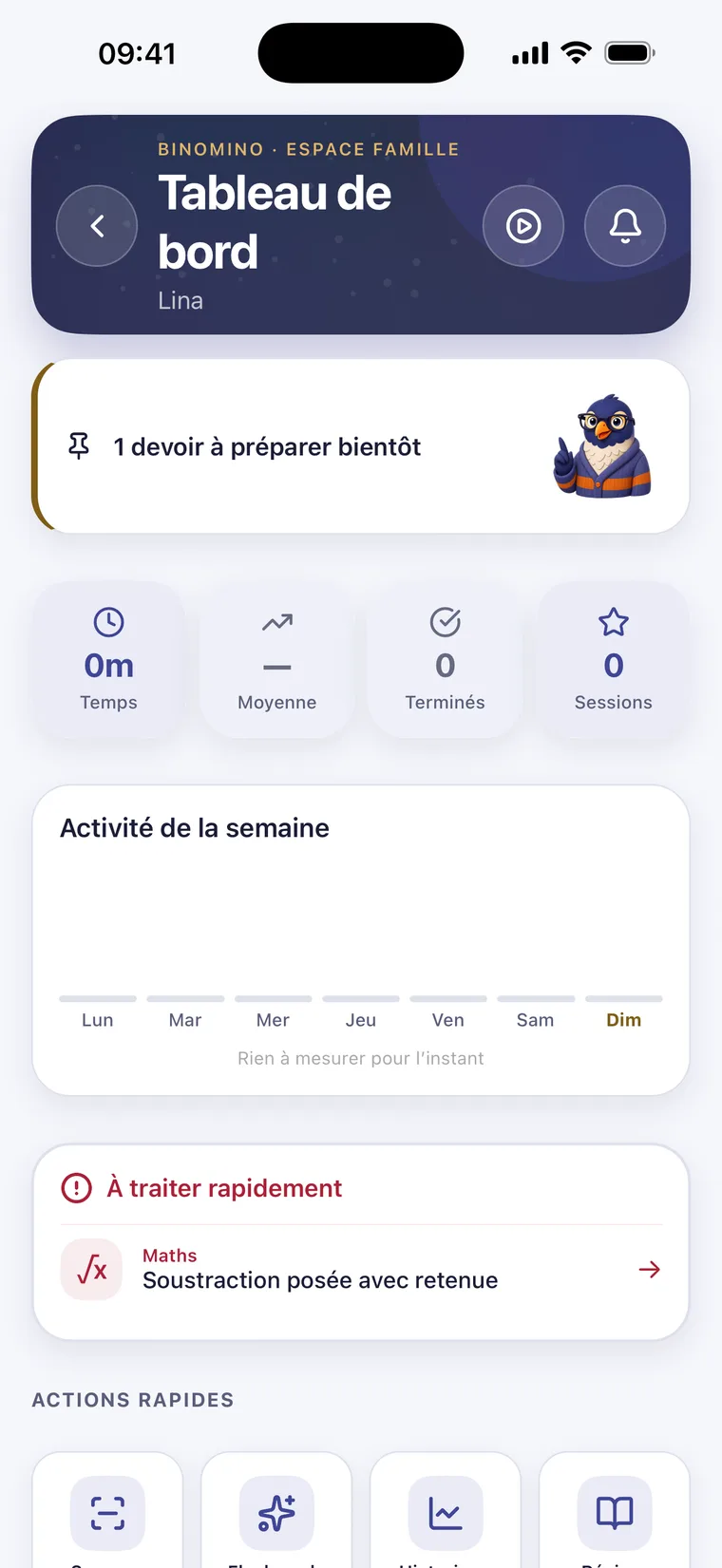
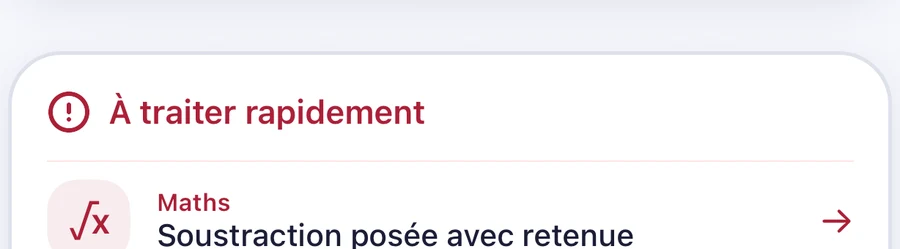
The dashboard shows the week, and a short list: where they got stuck, not the whole curriculum.
Binomino will not invent a score to please you.
No marks, no rankings. A light week isn’t a bad week. This dashboard is for you: you don’t have to show it to your child.
The curriculum
Not just tonight’s homework.
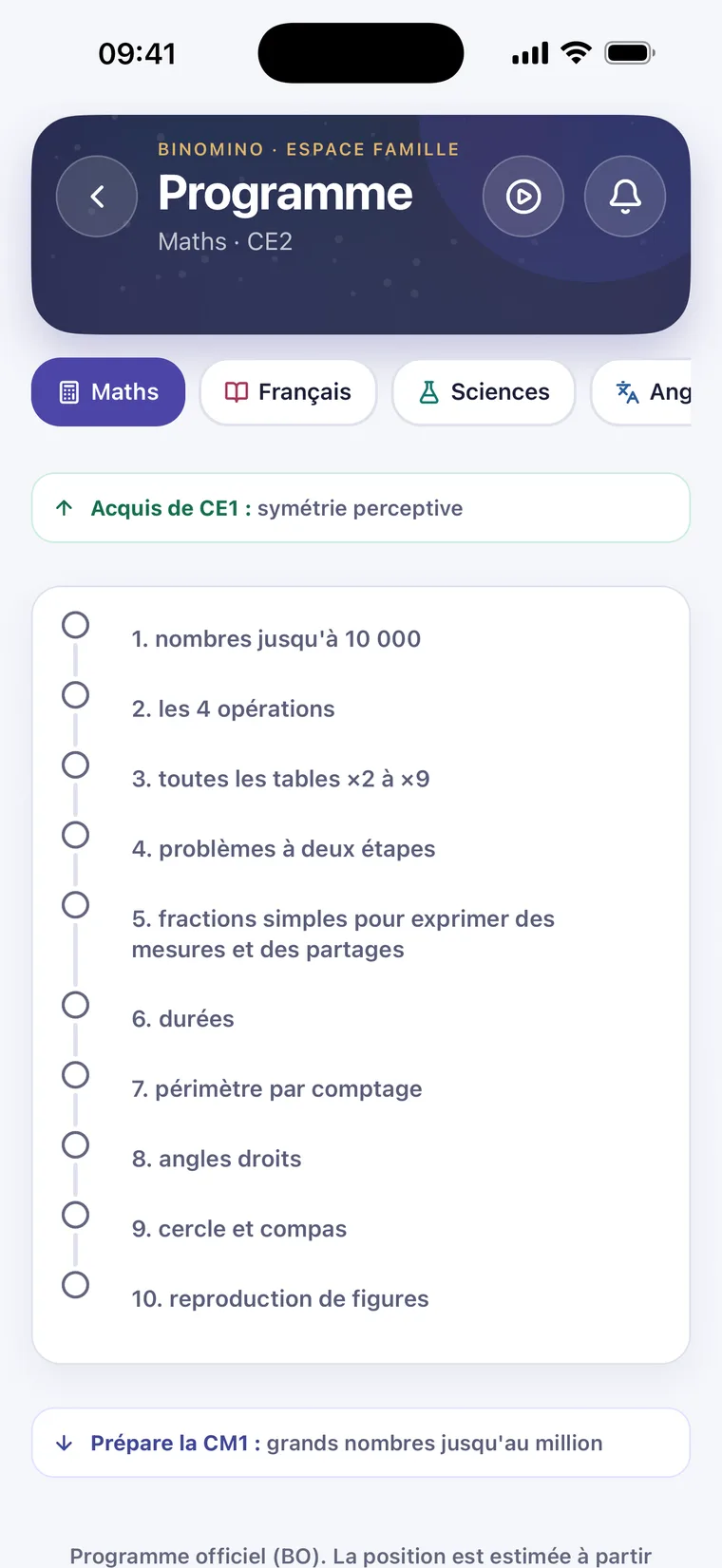
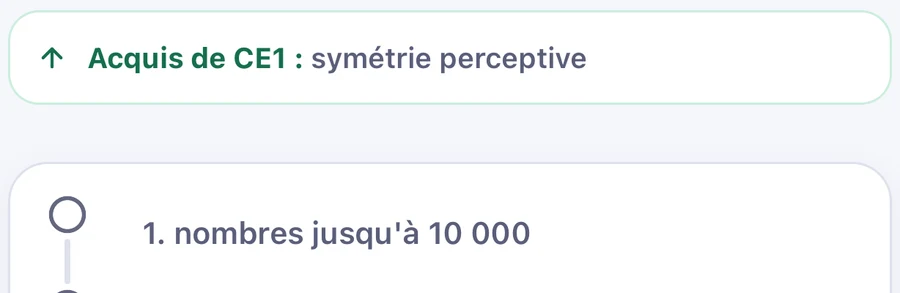
BeforeWhat was learnt last year.
This yearThe concepts on the curriculum, in order — Binomino places tonight’s homework among them.
AfterWhat the year is building towards — “Preparing for CM1: large numbers up to a million.”
This is what explains why they get stuck. A child who trips up on fractions is often tripping up on sharing, covered two years earlier.
Maths, French, science and English. From CP to Terminale.
Drawn up from the official curricula of the Éducation nationale, not from their class’s homework diary: every teacher works through it in their own order, so the position in the year is an estimate. Binomino does not assess your child.
School holidays
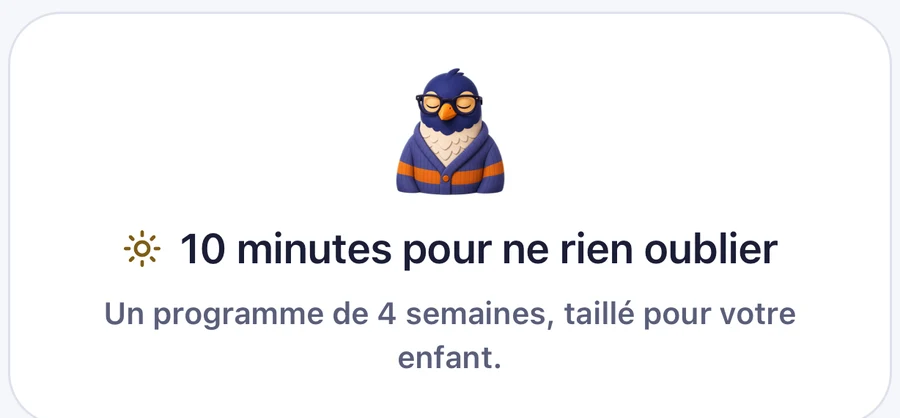
Ten minutes a day. No marks, no tests.
During the school year, you can’t stop: the class moves on, the homework is due tomorrow, and whatever wasn’t understood stays lodged there. In summer, there’s no tomorrow morning.
Without use, the automatic skills grow dull — times tables, written arithmetic, spelling, fluent reading. Not your child's intelligence. They come back quickly once taken up again.
How it works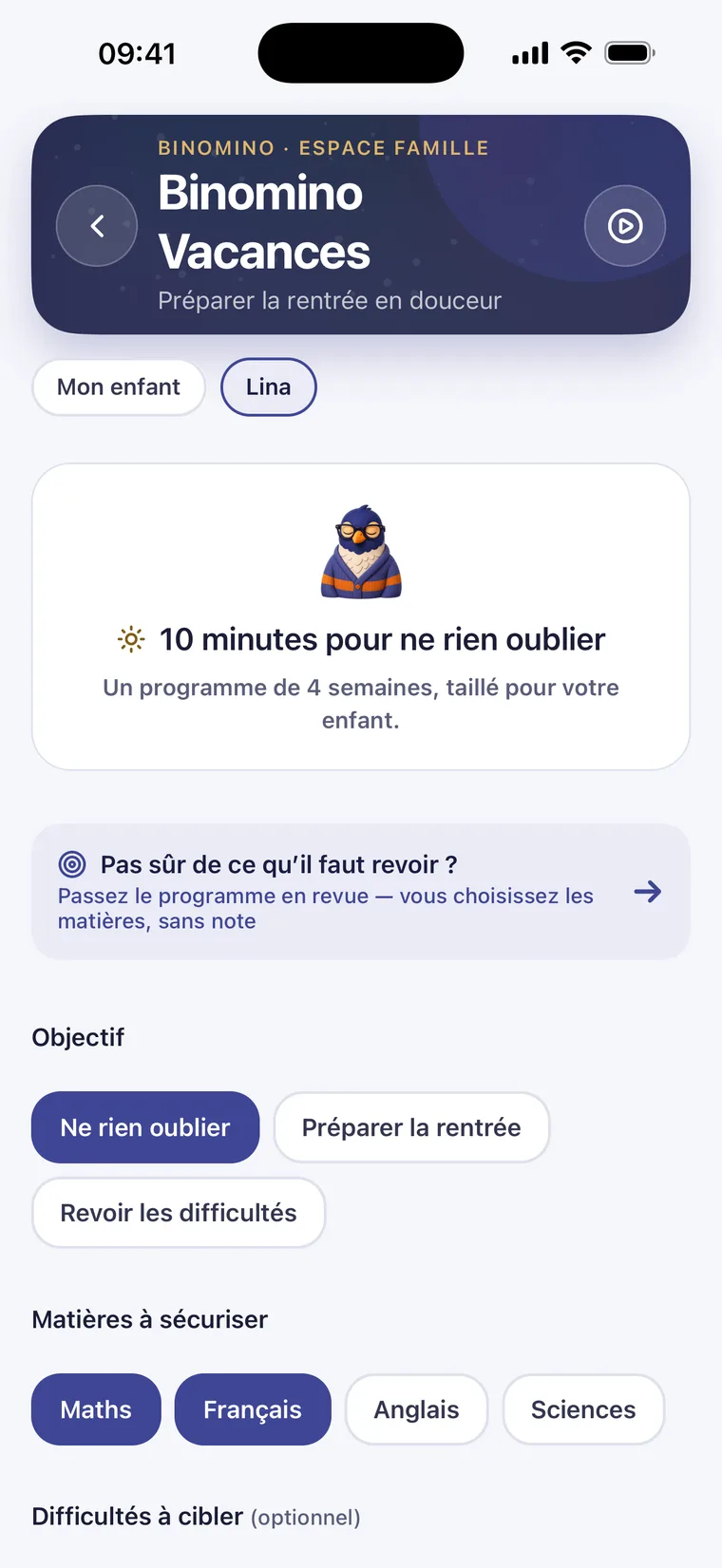
The ground rules
Profiles and history stay on your phone. An encrypted backup lets you move to a new device.
Encrypted, to the service that reads the page. It is not kept on our servers, trains no model, and is never resold. The details.
If something isn’t right in your child’s work, the first person to speak to is still their teacher.
Pricing
One plan for a hard week, one for the month, one for the year. All your children are included — not one subscription per child.
Weekly
3,99 €/ week
For a difficult chapter.
No trial periodMonthly
9,99 €/ month
The school year, month by month.
7-day free trialYearly
59,99 €/ year
All year round, holidays included.
7-day free trialThe free level lets you try without a card. The 7-day trial on the monthly and yearly plans is valid once per Apple ID. Cancel before it ends: nothing is charged. Cancel anytime in your iPhone settings.
Yes. You have nothing to solve. Binomino prepares the sentence to say, and you listen to your child work it out.
You read the app in English, Spanish, Portuguese or Arabic. The homework stays in French.
For you, yes: the worked answer comes after the steps. It’s there to check with, not to copy out.
The teacher is right, always. If the screen and the exercise book don’t say the same thing, it’s the screen that is wrong: follow the exercise book — and let us know where they differ.
That’s normal at that age. Switch to solo mode: you stay in the room, and you open “To consolidate” when they have finished.
Not yet. Reciting is memory. Ask them to say the lesson again in their own words. If they can, it’s understood. If not, it’s learnt by heart — and that doesn’t hold up against a different question.
No, but it slows them down: they have to remember two methods instead of one. With Binomino, there’s only one: the sentence on screen follows the method in their exercise book.
There’s no right length of time. The work is broken into steps, and you can stop cleanly at the end of any one of them. Stopping before things get heated isn’t giving up.
Not live. You send them the dated summary of the session by message. They have nothing to install. The two phones don’t sync yet.
No. It’s an independent app: not published, not approved and not endorsed by the ministry. The concepts come from the official curricula, which are public documents.
Available on the App Store